Design Operations Solutions @ P+
As the Paramount+ design organization scaled from a small team to a multi-platform operation, the need for operational infrastructure became critical. I identified gaps in how design work was documented, communicated, and handed off — and built solutions that brought structure and consistency to a fast-moving environment. These weren't top-down mandates; they were tools and workflows I designed in direct response to pain points I observed across teams.
Impact
Built an end-to-end Design Ops ecosystem — from centralized documentation in Zeroheight, to a custom Figma-to-Slack publishing bot, to standardized handoff templates — that improved handoff accuracy while driving a 15–25% increase in system adoption across product teams.
Role
Sr. Product Designer/PD Manager
Company
Paramount+
Work Process
Standardizing Documentation
Centralized Documentation (Zeroheight):
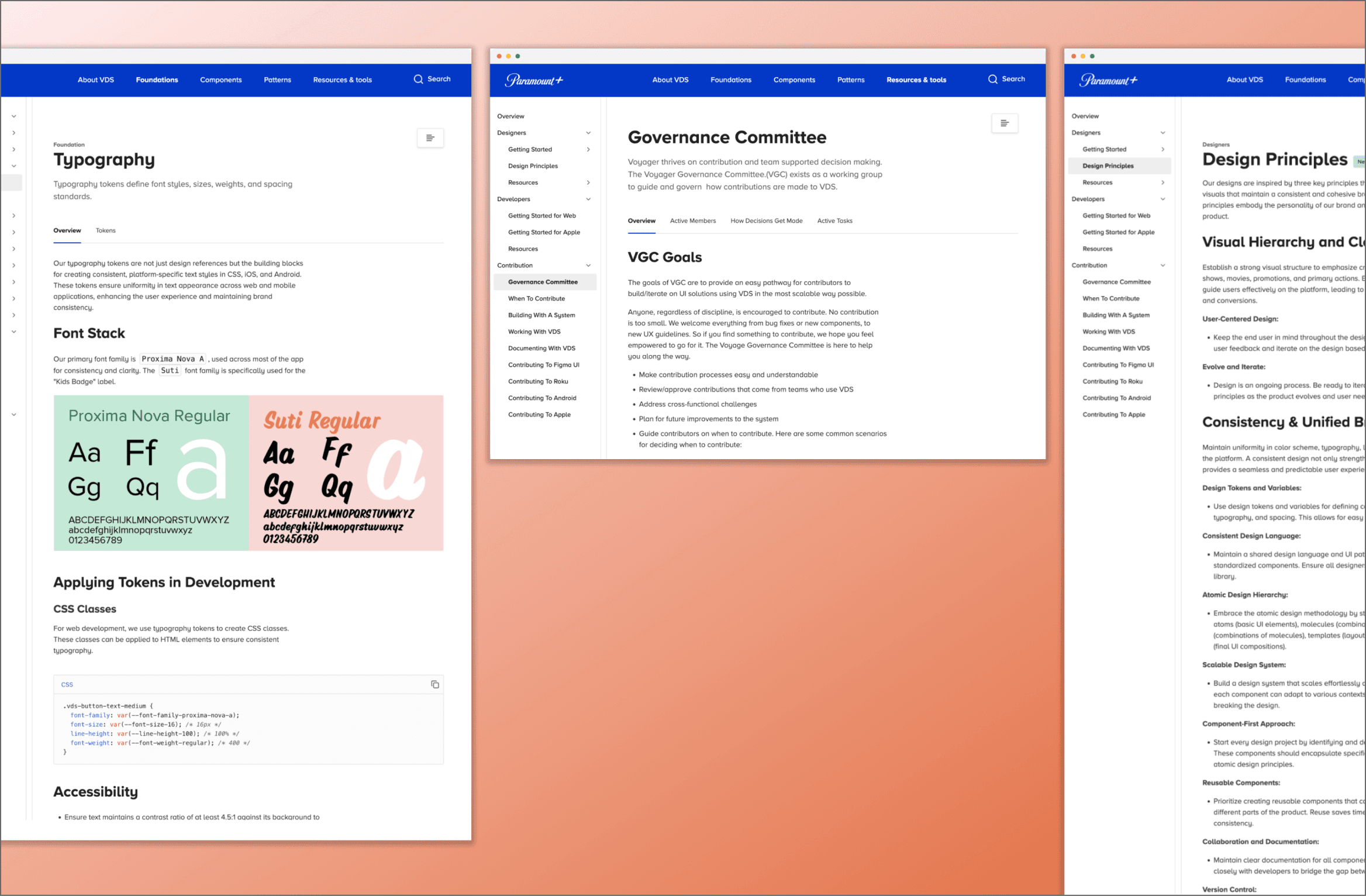
Launched a documentation hub that consolidated component specs, patterns, and governance rules—making the system easier to learn, reference, and maintain.
Figma File Architecture & Handoff Template:
Established a consistent file structure, naming conventions, and a reusable handoff template for the product design team that clarified requirements and reduced ambiguity during delivery.
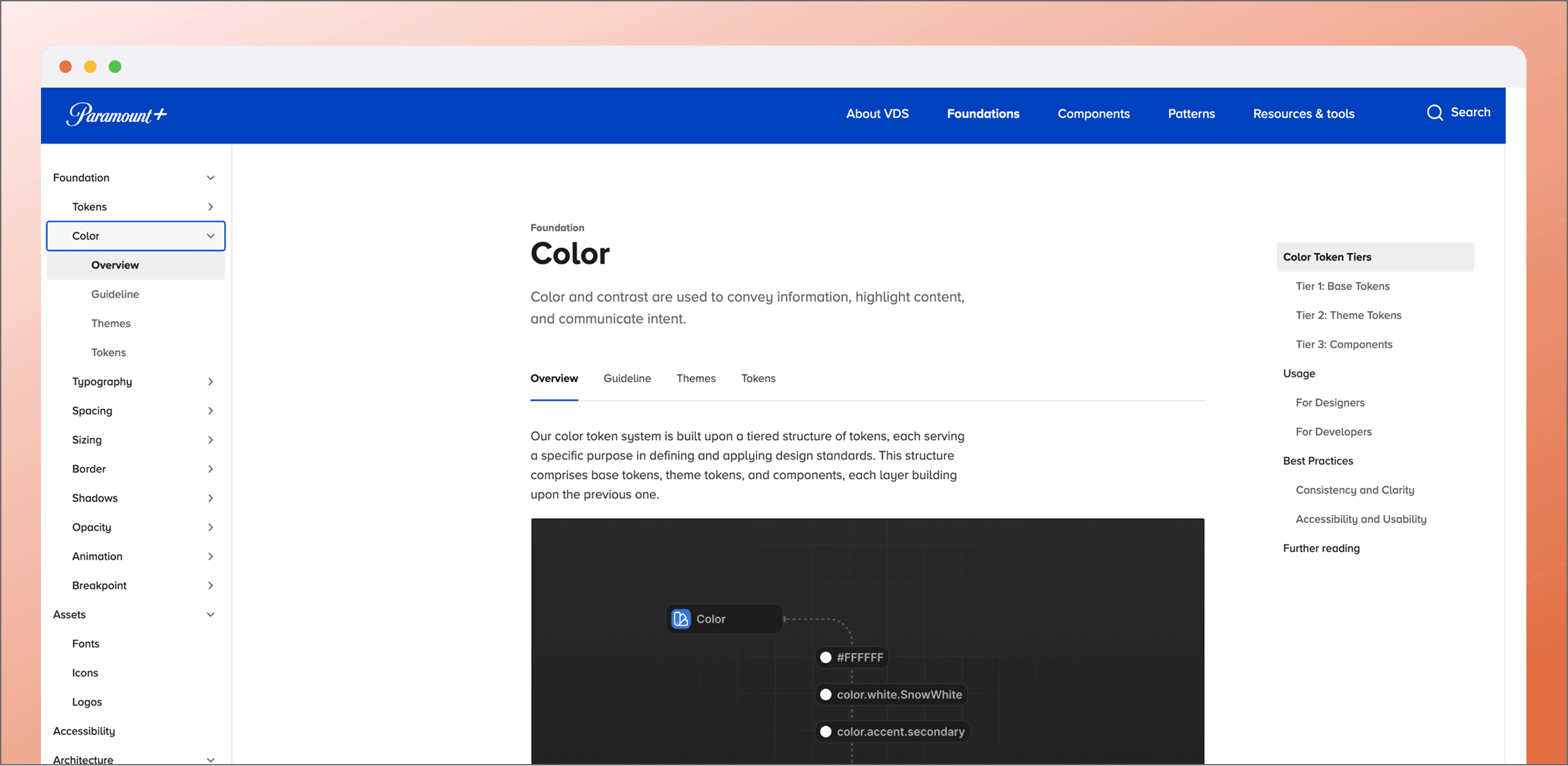
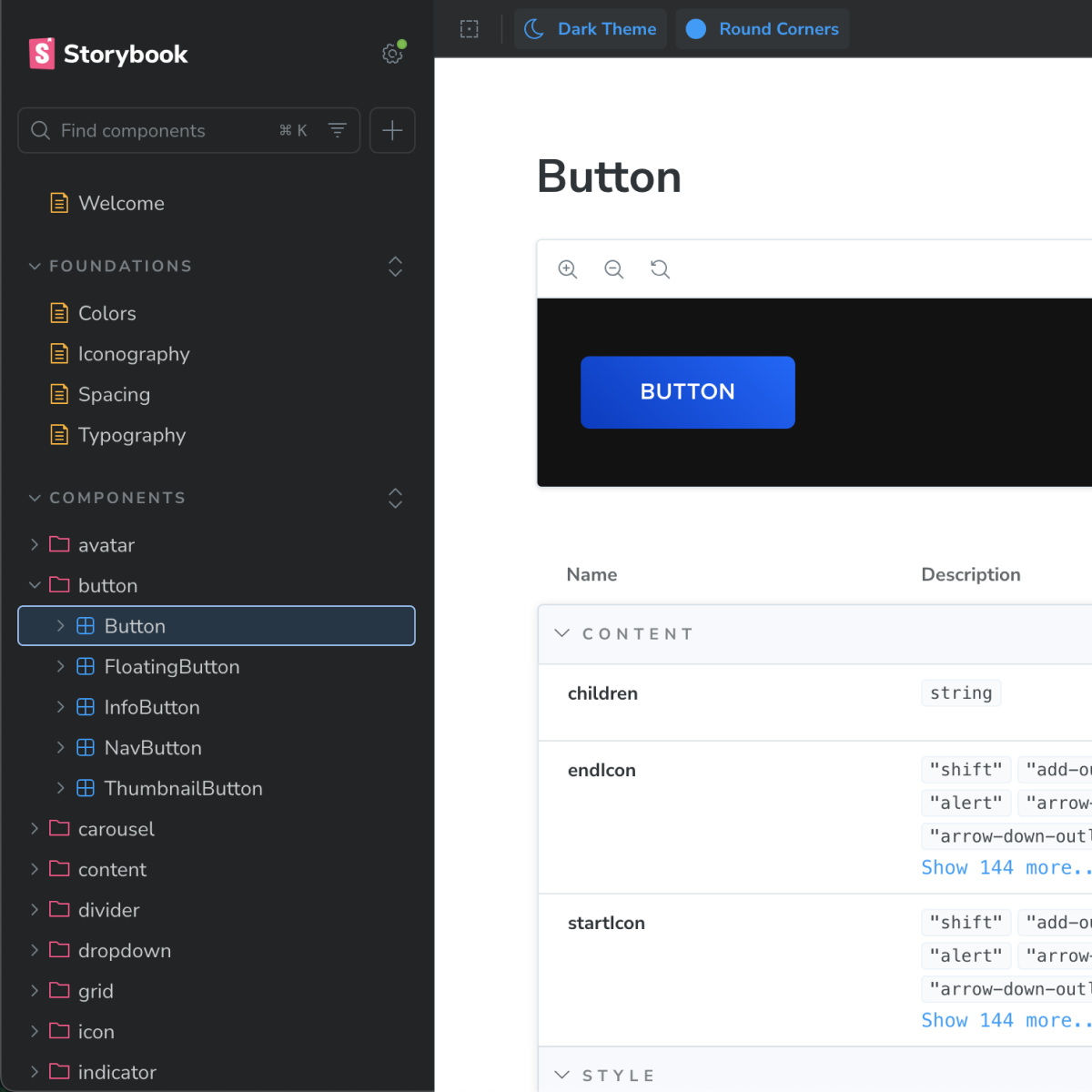
A dedicated documentation site in ZeroHeight for VDS created a source of truth of product design documentation. This would later serve as a foundational element to help onboard designers and devs using/adopting VDS.
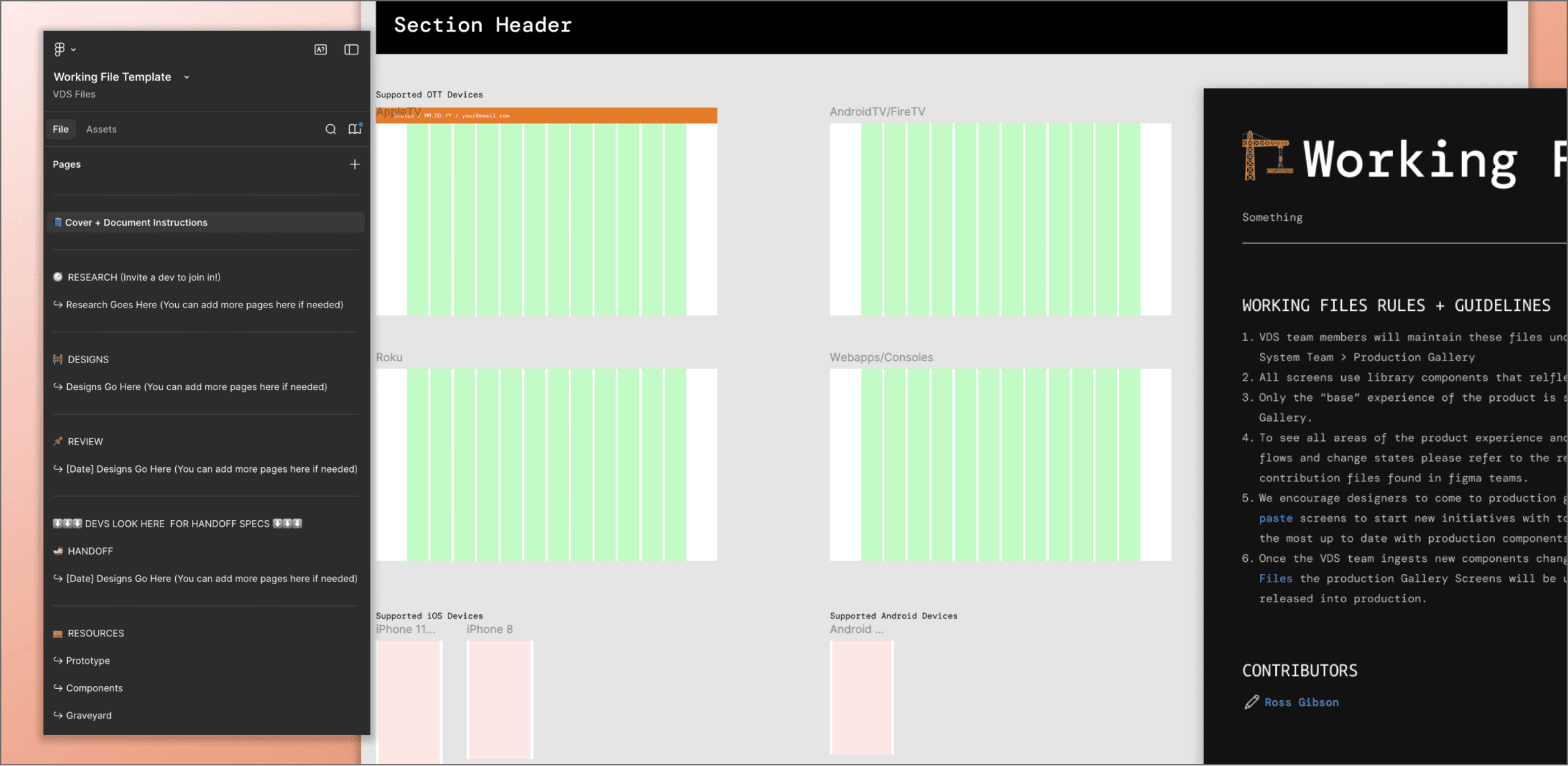
Prior to the VDS template, product/feature teams had different handoff standards. Working with dev leaders, VDS implemented/standardized feature handoff templates and branching workflows.
Work Process
Automating cross-team communication
Automated Figma-to-Slack Publishing Bot:
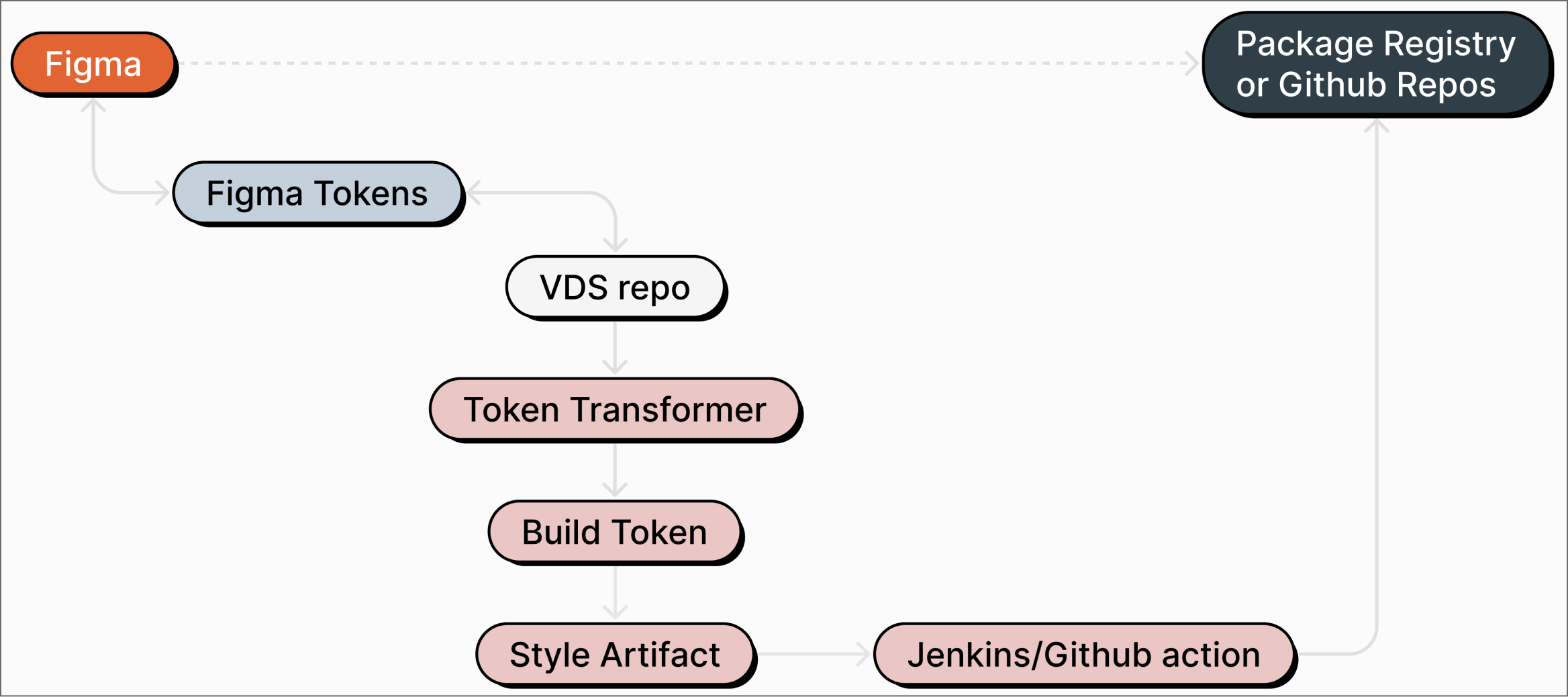
Partnered with the native app DevOps team to develop an automated pipeline that published component and library updates from Figma directly into Slack channels, increasing visibility and traceability.
Cross-Functional Integration:
Ensured all Design Ops tools aligned with engineering pipelines and the design system governance model, creating a cohesive operational layer supporting both iteration and scalability.
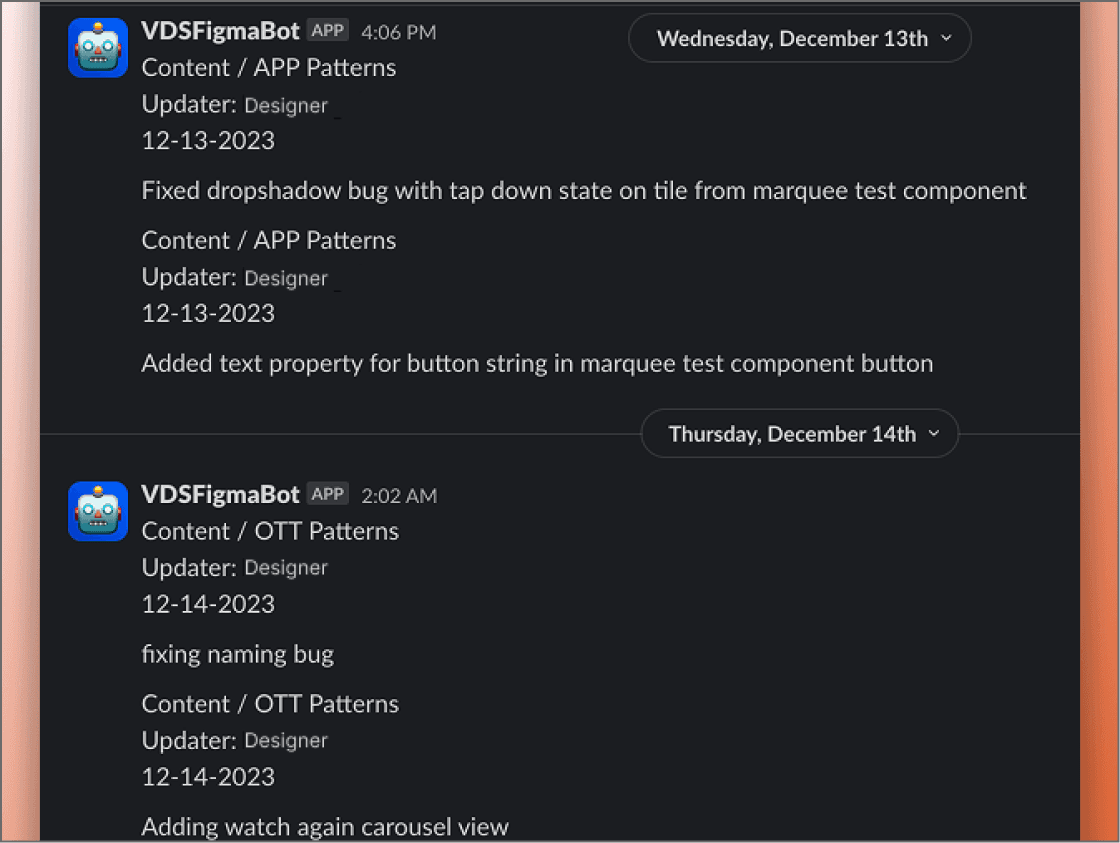
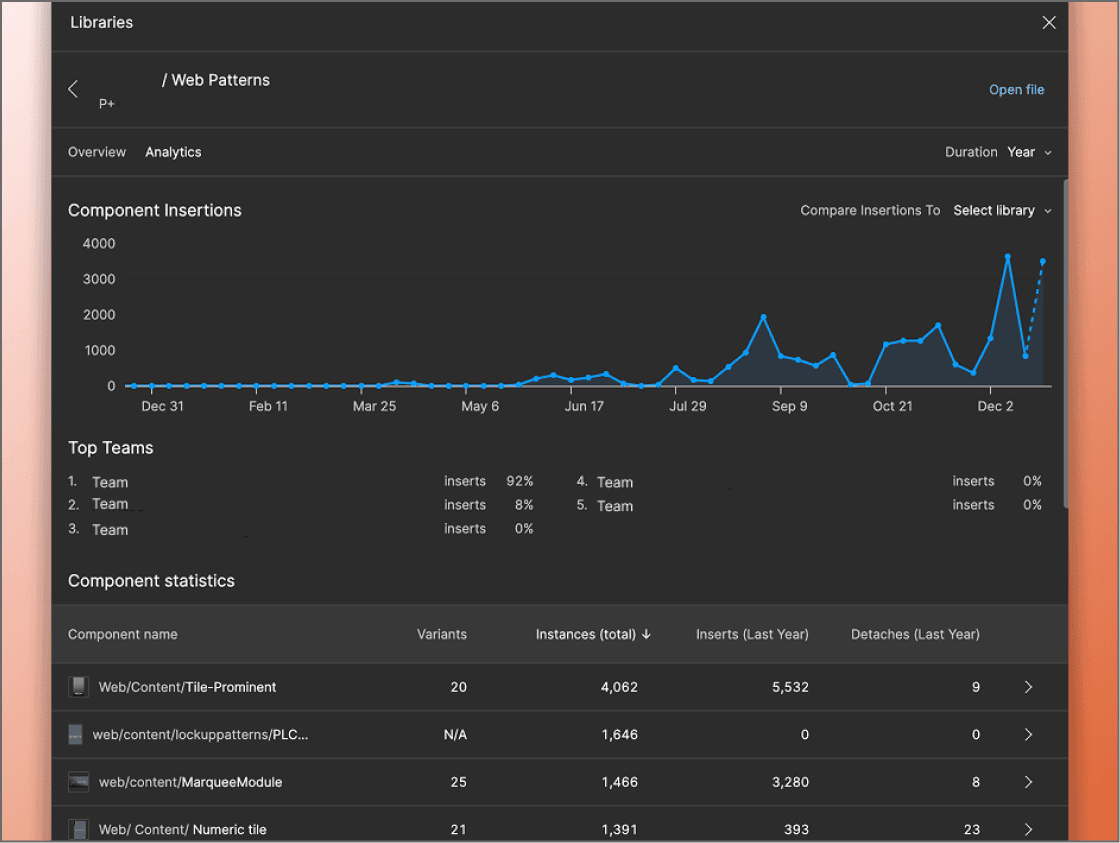
Introduction of tools like VDSFigmaBot lead to increased library usage: ~15–25% across product design teams.
Work Process
Increased clarity + design intention
Continual dialogue with the design teams helped myself and the VDS team understand how to adapt the team operations to address team changes, as well as new design features and tools. These adaptations over time built institutional knowledge within smaller design teams operating more independently.
Anna Takei, Sr. Product Designer
The structure was easy to follow, and I appreciated how closely the VDS team worked with designers so that it was tailored to our needs.
Ross organized weekly VDS office hours that I could easily hop into to discuss any questions or concerns, and he also hosted occasional workshops to walk the entire design team through major updates.
Emma Scheinbaum, Sr. Product Designer
The VDS component libraries and design documentation resources significantly improve the efficiency of my design process and allow for more time to be spent ideating. The component libraries are structured for the ease of creating handoff files with consistency and accuracy.
This is an important step in ensuring our design teams are aligned, and helps facilitate smooth engineering partnerships via the handoff delivery process. The VDS team works in partnership with our feature designers to refine systems that incorporate well into our workflow.
Outcome
Sweat the details
• Improved handoff accuracy and reduced downstream rework.
• Increased design system adoption and contribution rates increased by 15–25% across product design teams.
• Strengthened cross-team alignment and established reusable operational patterns that scaled with the organization.